Valuation & Purpose: How Objectives & Audience Shape the Outcome
Not all values are equal, and there is not a "one size fits all" valuation process. When examining a valuation report or presentation, it is important to understand the intent and purpose under which the analysis was conducted. In other words, the same company could have valuations conducted for different purposes and objectives with materially different values. Although this is often overlooked, it can have a major impact on the valuation outcome. Below are several concepts to consider when engaging a valuation expert or reviewing a valuation of a company.
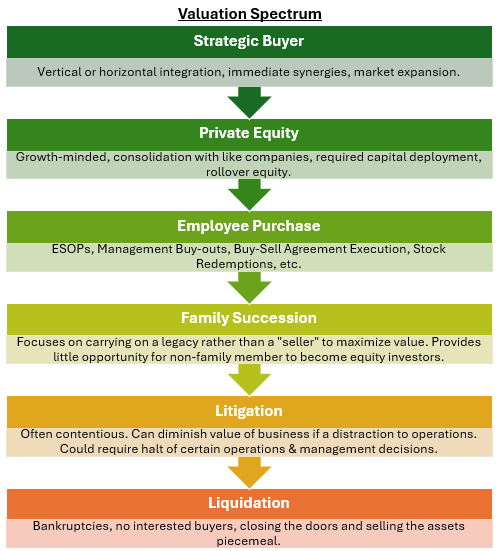
Succession/Transfer Objectives: Generally speaking, a valuation in an ownership transfer falls into one of the following categories. It is important to identify what parties were involved in the transaction or situation in order to understand how the company was valued. Companies selling for the highest valuation multiples are usually strategic acquisitions, followed by private equity, employee or management buy-outs, estate transfers, judicial rulings, and liquidations. Valuation experts often define this as the valuation spectrum.
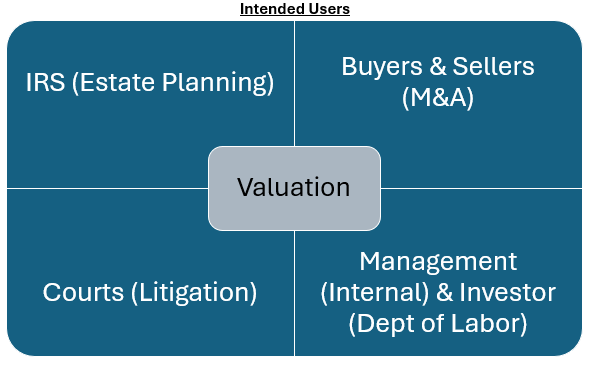
Intended Users: Similar to the exit event, the intended users of the valuation can mold the valuation outcomes. Below are a few examples of intended users and their relationship to the value.
Buyers & Sellers: Attracting new investors may be required to continue strategic growth or business succession. Generally, these valuations can be less formalized and utilize forward-looking projections to establish the value today. In many cases, these valuations are optimistic in nature. (Risks: Be cautious of overly optimistic projections)
Management & Employees: Valuations are often completed periodically for decision making or informing the ownership group of a company's current state of operations. These values may use a standardized approach or formula to evaluate a company. (Risks: Changing business dynamics can make a standardized approach less appropriate)
Tax & Estate Planning: Valuations being reported to the Internal Revenue Service have specific requirements that must be considered in a report. These usually include an analysis of any valuation discounts taken. (Risks: Can be conservative or include significant discounts to the market value of a Company)
Courts: Similar to tax valuations, various legal jurisdictions require certain elements to be disclosed in valuation engagement. Additionally, it is important to consider any assumptions or limiting conditions that may have impacted the valuation expert's opinion of a company's value. (Risks: Valuation bias or inconsistent assumptions and specific to a certain period of time)
Size of the Interest: A controlling interest in a company is generally worth more than a minority interest. When reviewing a valuation report, it is important to understand how large the size of the bloc of interest being valued is. This can have an impact on the discounts applied or adjustments made in the calculations.
In conclusion, valuation reports are complex documents that require careful analysis and evaluation. Different purposes, intended users, and sizes of interest can affect the valuation methods, assumptions, and results. Therefore, it is essential to understand the context and scope of a valuation report, as well as the risks and limitations involved. By doing so, one can gain a more accurate and reliable understanding of a company's value and its implications for various decisions and transactions.
For more information, please contact Bryan Setz at bryan@valueedgeadvisory.com.